
NEW · Dondy joins Circeus: our latest closed transaction →
Array Capital Book a call
Sell-side M&A · Shopify ecosystem

Sell your Shopify app to the right buyer, at the right price

Most advice on selling a Shopify app comes from marketplaces and generalist brokers. This guide comes from closed transactions: six announced Shopify-ecosystem exits, more completed quietly, and buyers who came back for a second deal. Here is what your app is worth, who actually buys, and how a sale runs when it is run properly.

6
Announced Shopify-ecosystem exits
Dondy, Back in Stock, Fileflare, 506, Complianz, Tabarnapp
80%
Deals closed cross-border
The best buyer is rarely next door
100%
Success-fee based
No retainers; we earn when you close
01Proof before advice

Shopify app acquisitions we have actually closed

Anyone can publish a guide. These are announced transactions where Array Capital ran the sell-side process end to end: materials, buyer sourcing, negotiation, close. Two of them, below, show the range: a bootstrapped founding team selling the #1 app in its category, and a software private equity firm choosing our process for its own exit.

2026 · Sell-side M&A Latest transaction
Dondy
has been acquired by

Circeus logo

Circeus, the AI-native technology holding formerly known as Shop Circle, acquired Dondy, the #1-ranked WhatsApp app on the Shopify App Store: a conversational commerce platform trusted by 70,000+ businesses and facilitating over $100M in orders per year.

#1
WhatsApp app on the Shopify App Store
70,000+
businesses on the platform
$100M+
orders facilitated per year

Seller · Israel Buyer · United Kingdom
Tamir OrOr SchreiberInbal Katz Or Tamir Or, Or Schreiber & Inbal Katz Or · Co-founders, Dondy

Array Capital acted as Dondy’s sole M&A advisor: materials, buyer sourcing, and process management end to end. The full deal story →

[a]
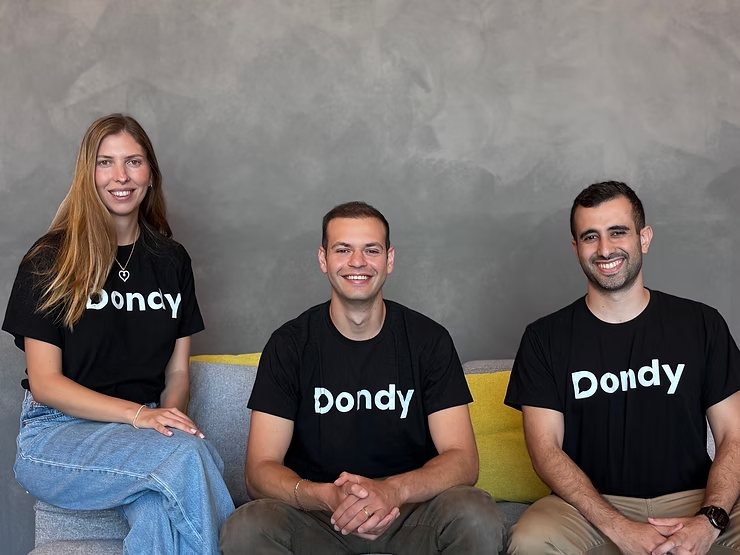

Repeat buyer · the group’s second acquisition from an Array Capital process
The Dondy founding team
2025 · Sell-side M&A
Back in Stock
has been acquired by
AMP

AMP, a Singapore-incorporated e-commerce growth platform with Australian roots, focused on AI-powered solutions, acquired Back in Stock, the leading Shopify demand-capture app, from SureSwift Capital, a Canadian software private equity firm.

$1.6B+
recovered revenue generated for merchants
25,000
e-commerce merchants served
Seller · Canada Buyer · Singapore
Patrick Barnes Patrick Barnes · CEO, AMP (buyer)

Array Capital acted as Back in Stock’s exclusive sell-side advisor. The full deal story →

[a]
The Back in Stock and AMP teams
02The buyer universe

Who buys Shopify apps?

Three buyer types dominate, and every one of them has closed a deal with us: app operators building portfolios, large strategic platforms buying a category position, and funded e-commerce growth companies buying capability. The winning buyer is usually not the one already in your inbox.

App operators and roll-ups

Groups that acquire and operate portfolios of e-commerce apps. Circeus (formerly Shop Circle) bought 506 in 2024 and returned for Dondy in 2026, both out of Array processes. Kestrel acquired Fileflare; Staytuned won the Tabarnapp bidding war. Serious operators return to processes that are prepared properly.

Strategic platforms

Large groups that buy a Shopify app as a product line. team.blue, the European digital enabler serving 3.3 million SMB customers across 23 countries, acquired beeclever's GDPR Legal Cookie and relaunched it as Complianz, its compliance brand. For a founder, this is how years of work become part of a group few could reach alone.

Funded growth platforms

E-commerce companies acquiring capability with fresh capital behind them. AMP, the Singapore-incorporated growth platform, raised $20 million and acquired Back in Stock in the same announcement. Notably, the seller there was SureSwift Capital, a software private equity firm: institutional money trades on both sides of this ecosystem.

The common thread: 80% of our transactions close cross-border, with counterparties from the USA and Canada to the UK, Germany, Israel, Singapore, and beyond. A buyer search that stops at your own inbox, or your own country, is not a search.

03Valuation

What is a Shopify app worth?

Shopify apps are currently trading at roughly 2.0x to 4.0x ARR. That is our own read of the market from live processes in this ecosystem, not a figure borrowed from a generalist report, and it is the number we would open with on a first call.

2.0x to 4.0x
ARR, current Shopify app market
Array Capital's own observation from live Shopify-ecosystem processes, August 2026. Profitable, well-retained apps with a defensible App Store position price at the top of the band; apps carrying platform, concentration, or churn risk price at the bottom or below it.

For context, the published benchmarks for small software deals generally, which are quoted on profit rather than revenue below roughly $10M of value:

4.8x
Median ARR multiple, bootstrapped private B2B SaaS
SaaS Capital survey of private B2B SaaS companies · start of 2025
5.3x
Median ARR multiple, equity-backed private B2B SaaS
SaaS Capital survey; the funding profile moves the multiple · start of 2025
4-10x
Typical SDE range for brokered SaaS sales
FE International valuation guide; SDE below ~$5M of value, EBITDA above · January 2026

Those are market-wide figures for small software deals, not Shopify-specific quotes; no publisher breaks this segment out at credible sample size, which is why the ARR band above comes from our own processes instead. Where your app lands inside it is decided by the drivers buyers price everywhere: growth trajectory, merchant retention, how concentrated your revenue is in your largest customers, and the ecosystem factors below. Two apps with identical profit can sell at very different multiples, and the difference is rarely luck; it is how well the process makes buyers compete. The full dataset, from public SaaS peaks to private M&A medians, is in our SaaS valuation multiples report, refreshed quarterly.

04Ecosystem specifics

What makes a Shopify app valuation different

Generic SaaS math misses the levers that actually move price in this ecosystem. Buyers who know the App Store underwrite four things a spreadsheet does not show.

App Store rank and reviews are a distribution moat

A top position in a competitive category, backed by a deep, well-rated review base, is customer acquisition a buyer cannot rebuild quickly at any budget. Dondy went to market as the #1-ranked WhatsApp app on the Shopify App Store; that rank was a core part of the value story, not a vanity metric. Rank, review velocity, and category position belong in your materials with the same weight as revenue.

Built for Shopify status signals quality

The badge tells an acquirer the app meets Shopify's own bar for performance, design, and merchant experience, and that it benefits from the visibility Shopify gives compliant apps. It is not a requirement to sell, but it removes a diligence question before it is asked, and buyers pay for removed questions.

Platform dependency cuts both ways

Every buyer will raise it: your revenue depends on Shopify's platform, pricing, and policy decisions. Sophisticated buyers do not treat that as disqualifying; they treat it as a factor to price, and a deep ecosystem position is also exactly what they are paying for. The difference between a discount and a premium is whether the story is framed before buyers frame it for you.

Usage revenue is not subscription revenue

Many Shopify apps mix flat subscriptions with usage-based charges that scale with merchant volume. Buyers underwrite the two differently: subscriptions for predictability, usage for upside tied to merchant success. Presenting them as one revenue line invites the buyer's most conservative reading of both. Separate them cleanly and each gets valued on its merits.

05Process and timeline

How long does it take to sell a Shopify app?

Our mandates typically run 3 to 5 months from preparation to signed LOI, with closing 1 to 2 months after; the published market average for advisor-run private sales is 6 to 12 months end to end. Preparation is the difference: materials and data room are complete before the first buyer conversation, so diligence has nowhere to stall.

The process itself is confidential by construction. Your company runs under a codename, buyers see anonymized materials first, and your identity is disclosed only after a signed NDA, to parties you have not vetoed. Every document is watermarked per recipient. The full mechanics are on our confidentiality page, and the stage-by-stage market data is in our report on how long it takes to sell a software company.

Prepare before anyone knows

Institutional-grade materials and a complete data room, built while you keep running the app. Your metrics keep compounding; the preparation work runs on our side.

Approach a curated list, individually

A named list of operators, strategics, and growth platforms, approached one by one under NDA. Never listed on a marketplace, never mass-mailed.

Make buyers compete on a deadline

Offers arrive against a hard date, so every bidder knows they are not alone. Competitive tension is a function of pace, and pace is a function of preparation.

Negotiate and close

Structure, diligence, and final terms negotiated by an advisor trained at Partners Group, Legend Holdings, and Roche M&A, working exclusively for you.

5 months
from mandate to closing on the Tabarnapp sale, after three offers inside the first two months and a bidding war, covered independently by They Got Acquired
The full deal story →
06Founder questions

Shopify app sale questions, answered straight

Do I need Built for Shopify status before selling?

No. It strengthens the story and shortens diligence, but buyers ultimately underwrite revenue quality, retention, rank, and reviews. If the badge is within reach on a reasonable timeline, earning it before launch can be worth the wait; if not, sell on the fundamentals you have.

Will Shopify, my team, or my competitors find out?

Not from us. The process runs under a codename, buyers sign NDAs before your identity is disclosed, materials are watermarked per recipient, and mandates are never listed on marketplaces or mass-mailed. Confidentiality survives the process whether or not a deal closes.

Part of my revenue is usage-based. Does that hurt the price?

Not by itself. Usage revenue tied to merchant volume is upside in a buyer's model, provided it is presented separately from subscriptions with its own history and drivers. What hurts price is blending the two, because buyers then apply their most conservative assumption to the whole line.

A roll-up already emailed me an offer. Should I just take it?

That offer is an anchor, not an outcome. It tells you a buyer sees value; it does not tell you what the market would pay. We regularly run focused processes around an existing offer: the bidder stays at the table, and competition tells you what your app is actually worth. Sometimes the original buyer still wins, at a better price and terms.

What does it cost to sell through Array?

A success fee of 4 to 6% of the transaction value, nothing else. No retainers, no upfront fees. If we do not sell your company, you owe us nothing. Fee details are on our fees page, and the first step is a discovery call where we tell you honestly whether a sale now is the right move.

Considering an exit in the next 12 to 24 months?

A 30-minute discovery call: our read on your valuation, buyer universe, and timing. No commitment, full confidentiality.